
Wireless sensors for multi-sensing in real-time
The ultra-thin wireless sensors of MultiMoS collect data cost-effectively even in confined spaces. The customizable integration of additional parameters beside pressure and temperature as standard for simultaneous measuring enables tailored solutions that feed advanced Physical AI algorithms, unlocking deeper insights and enabling smarter, autonomous decision-making. With effortless installation, instant connectivity, and future-ready IoT compatibility, MultiMoS adapts flexibly to evolving environments and business needs, helping companies implement faster, act smarter, and achieve measurable performance improvements in even the most complex settings.
What are wireless sensors?
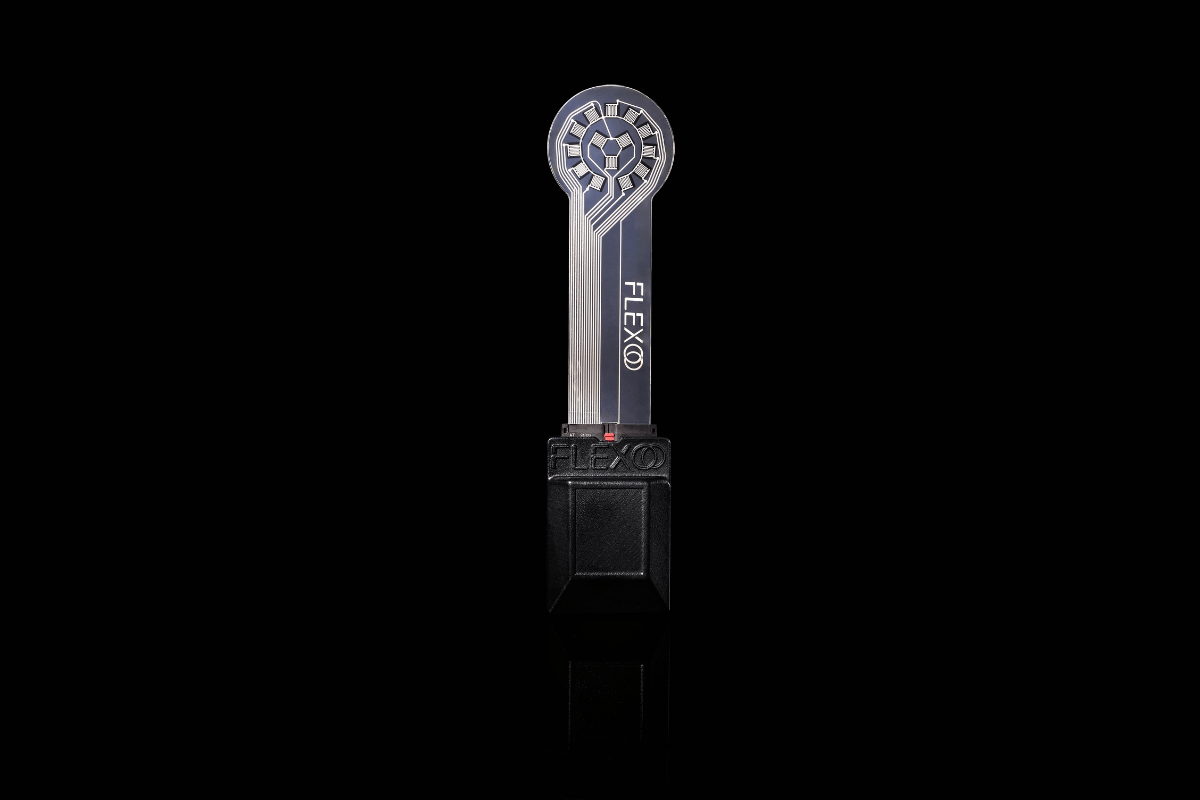
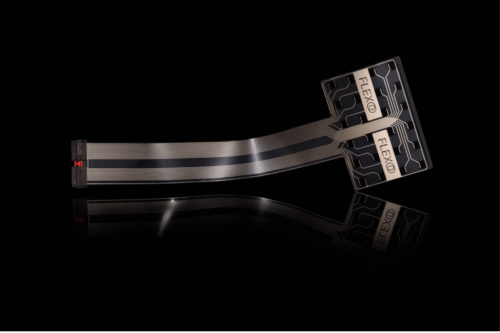
Wireless sensors are ultra-compact measurement devices that collect and transmit data without physical connections. MultiMoS's ultra-thin sensors use Bluetooth Low Energy (up to 30m range) and upcoming LoRaWAN for IoT integration, featuring embedded electronics, 1 Gbit storage, and multiparameter sensing capabilities in printable form factors.
What problems do wireless sensors solve?
Wireless sensors eliminate high installation costs, complex cabling, limited data access, and monitoring restrictions in inaccessible locations. MultiMoS addresses these with real-time data transmission, ultra-thin design for tight spaces, and 50-hour continuous operation without recharging.
What types of wireless sensors are available?
Common wireless sensor types include temperature sensors for thermal monitoring, pressure sensors for mechanical stress detection. MultiMoS provides multiparameter wireless sensors with standard pressure and temperature measurement. Customizable options include humidity, VOC detection, gas sensing, and other parameters.

How precise are wireless sensors?
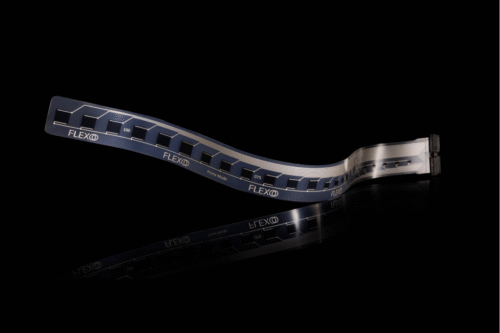
Modern wireless sensors achieve high measurement accuracy through advanced electronics and signal processing. MultiMoS offers the world's most precise tactile sensing, delivering superior signal quality without crosstalk. Operating from 10°C to 100°C for sensors and -20°C to +60°C for electronics, ensuring reliable performance in demanding environments.
Wireless sensors printed according to your technical specifications
Your give us your technical specifications and FLEXOO takes care of the printing process.
Custom wireless sensors developed and printed by FLEXOO
We develop a custom wireless sensor solution that fits your needs and print it for you.
Key technical data of FLEXOO's wireless sensors
Sensor
- Up to 26 sensing points
- 16 Bit ADC resolution (65536 quantification points)
- Simultaneous measurement of customizable multiparameter - pressure/temperature as standard
- 10 °C to 100 °C (in non-condensing solvents) temperature range
- Standard foil design: rectangular, stripe, slider, circle
Electronics
- Bluetooth Low Energy 5.4 | LoRaWAN coming soon
- Up to 150 fps transmission rate (Bluetooth)
- Range: up to 30 meters
- 1 Gbit data storage on PCB
- – 20° C to + 60° C temperature range
- 50 h continuous measurement (Bluetooth), Lithium Ion Battery 1200 mAh rechargeable
Why should you choose FLEXOO's MultiMoS as your wireless sensor?
Use case applications for wireless sensors

Automotive safety and comfort

Medical and wearable technology

Energy storage monitoring

Logistics and inventory management

Industrial asset monitoring

Physical AI applications
Frequently Asked Questions
1. What are the main advantages of using wireless sensors over wired ones?
Wireless sensors offer significant advantages including reduced installation costs by eliminating expensive cabling, increased flexibility for deployment in inaccessible locations, simplified system scalability, and enhanced mobility. They enable remote monitoring and facilitate seamless communication between machines and systems, offering advantages in terms of low installation cost, scalability, flexibility, lack of cabling, intelligent-processing capability, high mobility and ease of deployment. Wireless systems also eliminate wiring complexity and reduce maintenance requirements while providing easier reconfiguration capabilities.
2. What are the typical components of a wireless sensor system?
A wireless sensor system typically comprises sensing elements (temperature, pressure, accelerometer), signal processing electronics with analog-to-digital conversion, wireless communication modules (Bluetooth, WiFi, cellular), power management systems including batteries and charging circuits, and data processing software. Advanced systems like MultiMoS include ultra-thin printed sensors, embedded electronics with Bluetooth Low Energy 5.4, 1 Gbit onboard storage, 16-bit resolution measurement capabilities, and upcoming LoRaWAN connectivity. Available in multiple form factors with customizable sensor layouts.
3. Can wireless sensors be used for real-time monitoring?
Yes, wireless sensors are highly effective for real-time monitoring applications. They help gather real-time data, enabling remote monitoring, and machines can communicate their status and performance metrics in real time across wireless networks. MultiMoS provides continuous real-time data transmission via Bluetooth Low Energy with up to 50 hours of operation without recharging. The system delivers superior signal quality without crosstalk for reliable real-time monitoring applications.
4. Can FLEXOO print wireless sensors according to the client's technical specifications?
Yes, you can provide us the technical specifications of your wireless sensors and outsource the printing process to us.
5. Are they suitable for harsh industrial environments?
Wireless sensors are well-suited for harsh industrial environments. Industrial Wireless Sensor Networks perform reliably in harsh industrial environments, and wired solutions are not practical for isolation requirements for highly humid environments, high magnetic fields, or vibration. Advanced wireless sensors like MultiMoS operate reliably from 10°C to 100°C (sensors, in non-condensing environments) and -20°C to +60°C (electronics). The robust design ensures consistent performance in demanding industrial and automotive applications.
6. How do wireless sensors contribute to automation and efficiency?
Industrial wireless sensors reduce downtime, prevent costly repairs, and ensure that machinery operates at optimal levels. Higher operational efficiency translates to better productivity. MultiMoS enables Physical AI applications by providing high-fidelity multiparameter data that feeds advanced algorithms for autonomous decision-making. The plug-and-play design reduces installation time while real-time data improves operational efficiency.
7. What is the typical range of wireless sensors?
Wireless sensor range varies significantly based on technology and application requirements. MultiMoS sensors feature Bluetooth Low Energy connectivity with up to 30 meters range. Upcoming LoRaWAN compatibility will extend range significantly for wide-area IoT applications and many-to-one data collection scenarios.
Get in contact with us!
Talk to our experts!
Have a specific application, challenge, or project in mind? Schedule a meeting with our team to discuss your requirements and explore potential next steps.
Other FLEXOO sensors
Check what FLEXOO has to offer in terms of sensing technology
Large-area sensors
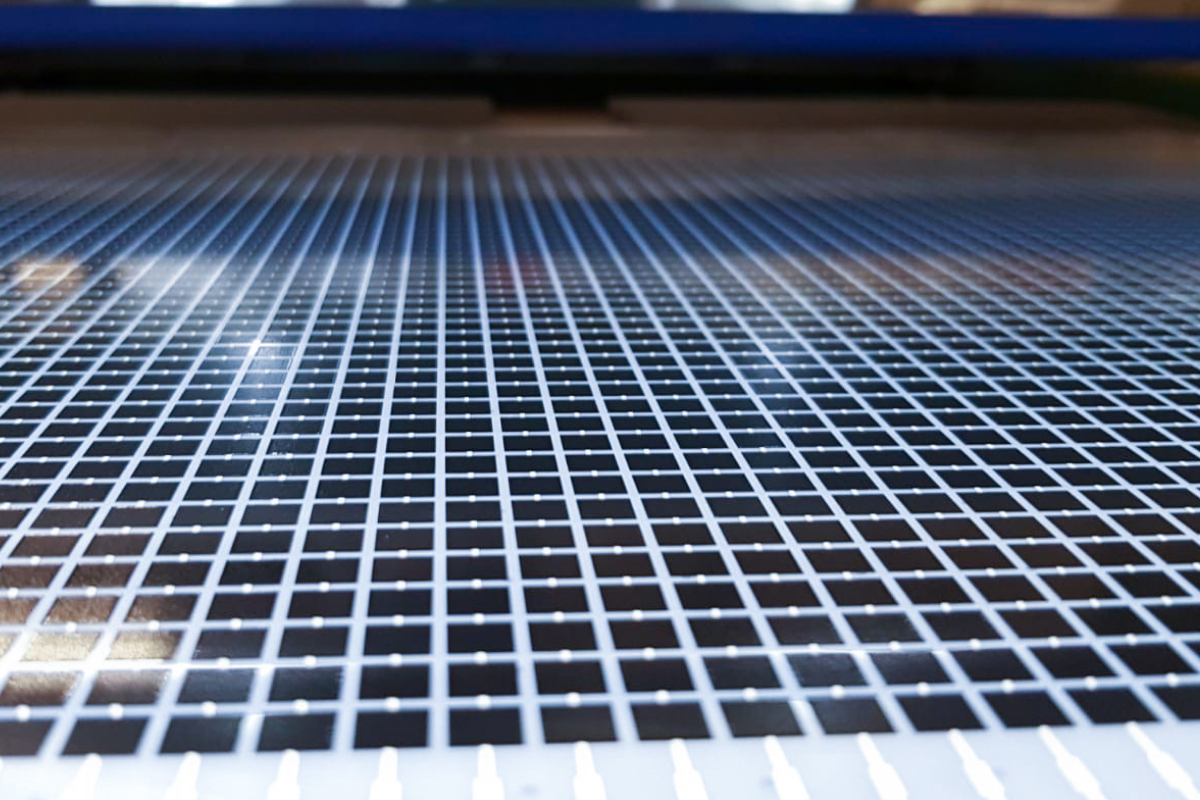
Transcend the limitations of localized data by deploying scalable, printed sensing arrays that blanket entire surfaces. These systems offer an unbroken stream of environmental data, capturing parameter fluctuations across massive footprints without a single lapse in coverage. By leveraging onboard readout technology, operators gain a holistic view of structural health, allowing for more rigorous safety standards and data-backed maintenance strategies.

Cellular temperature sensors
Upgrade your BESS safety profile with miniaturized, customizable sensing solutions designed for deep integration. These sensors fit effortlessly into existing cell or pack designs, providing a real-time data bridge directly to the Battery Management System. By capturing high-fidelity pressure and thermal metrics at the source, these sensors act as a proactive defense against cascading failures. The result is a more resilient energy storage solution with an extended service life and a early-warning framework.