FLEXOO featured in econo: Tactile sensing for Physical AI
2026-07-28
Editor’s Note: The following article is an English translation of the interview“Heidelberger Unternehmen gibt Maschinen ein Gefühl” (“A Heidelberg Company Gives Machines a Sense of Touch”), originally published in the German business magazine econo in July 2026. The interview explores the role of printed sensing in automotive applications, energy storage, and emerging Physical AI systems. It was conducted by journalist Jörg Runde and first appeared in German.
FLEXOO GmbH, based in Heidelberg, develops printed sensing technology - a technology that makes batteries safer, vehicle seats smarter and, in the future, gives robots a tactile sense. Managing Directors Michael Kröger (47) and Janusz Schinke (42) speak with econo about the company's roots in InnovationLab, its latest financing round, growth in automotive and energy storage, and why innovation in China often reaches the market faster.
For those who are not yet familiar with FLEXOO: What does your company do?
Michael Kröger: FLEXOO is a high-tech company that uses conventional manufacturing processes to produce novel sensor products. Put simply, we bring sensors to places where they could not previously be integrated - whether because of space constraints, geometry, or cost. Our goal is to give machines additional sensing capabilities.
You could also put it more figuratively: We give machines a sense of touch. Our sensors enable pressure, touch, or temperature to be detected on surfaces where this was previously either technically impossible or economically unviable.
Janusz Schinke: The key point is that we use highly established manufacturing processes for this - particularly printing technologies. This allows us not only to design sensors with a high degree of flexibility, but also to manufacture them very efficiently. As a result, we can replace existing sensing technologies in many applications at significantly lower cost, especially when large-area sensing is required.
FLEXOO emerged from Heidelberg’s InnovationLab. How did this spin-off come about?
Kröger: The spin-off came about when it became clear that the structures of InnovationLab were no longer sufficient for the transition to industrial scaling. InnovationLab is designed as a platform for technology transfer - that is, for collaboration between science and industry. It provides an environment where technologies can emerge and initial applications can be developed. However, once market demand begins to grow and investments in production capacity become necessary, that goes beyond the original mission of such an organization.
What did you do next?
Schinke: As the management team, together with the other founders, we decided to build these production capabilities ourselves. Initially, we received support from local banks. We therefore started out entirely without external venture capital investors and, through the development and acquisition of a production facility, laid the foundation for what FLEXOO is today.
You have recently completed a financing round, raising a total of €11 million. How important was that?
Kröger: It was crucial for our future plans. From the very beginning, we set out with the ambition to grow quickly. That requires capital - especially if you want not only to scale existing products, but also to develop additional technologies and expand internationally. That is difficult to achieve through traditional bank financing alone.
We are also a founding team of five people, not a traditional entrepreneurial family with a dominant shareholder in the background. What we aim to achieve requires equity capital and partners who are willing to support growth. The capital we have now raised enables us to take the next steps decisively: serial production, business expansion, international growth, and technological differentiation.
What are you currently working on?
Schinke: Our main target markets at the moment are automotive, energy storage, and industrial applications. Batteries and automotive are currently the most dynamic areas.
Kröger: In the automotive sector, we work on safety and comfort sensing, among other things. One example is sensors for vehicle seats. Today, it is no longer just about detecting whether someone is sitting in a seat and wearing a seatbelt. Modern systems capture pressure distributions, identify seating positions, and can use this information to determine how a safety system should respond.
For example, if an airbag is deployed, it makes a difference whether the occupant is a 100-kilogram adult or a significantly lighter person. That is why these systems are becoming increasingly important.
Schinke: At the same time, we are seeing a strong trend in Asian markets where comfort features are becoming increasingly important competitive differentiators. There is significantly more investment in seats, personalization, and adaptive interior concepts. Our sensors make it possible to implement such “smart seats” economically, allowing them to adapt to the person currently sitting in them.
You mentioned batteries as another application area. What role does your technology play there?
Kröger: A very important one. In electric vehicles in particular, manufacturers need sensing solutions that work across large areas, can be integrated flexibly, and are cost-effective at the same time. For example, we develop sensors that can detect critical events in battery housings, such as mechanical impacts or thermal anomalies. In an ideal scenario, this allows vehicle owners to be informed at an early stage that a service inspection may be required.
What is particularly interesting is that, from a manufacturing perspective, seat sensors and battery sensors are fundamentally very similar. The materials and processes remain largely identical. The main difference lies in the layout - that is, in the geometric adaptation and the specific design.
Schinke: That is a key advantage of our technology. Using the same processes and the same base materials, we can manufacture very different products. I often compare it to newspaper printing: the content changes every day, but the process remains the same. This allows us to realize different sensor layouts quickly and cost-effectively.
Is the shift toward electromobility a clear driver from your perspective?
Kröger: Absolutely. Electromobility is a major driver of innovation for us. It is changing existing value chains, creating new requirements, and opening up markets for new technologies. While this may be challenging for established market participants, it represents a major opportunity for a company like FLEXOO. Electromobility is creating disruptions and new entry points - and that is exactly where our technology becomes relevant.
Schinke: This development is bringing momentum to the industry. Another important trend is autonomous driving. If people sit differently in vehicles in the future or are able to move around freely, vehicles will need to identify occupants and their positions much more accurately. Our sensing solutions address these requirements as well.
You often speak about China and Asia. How do you assess the dynamics there?
Kröger: China committed to electromobility very early and very consistently. For many years, there was a clear signal that this was the direction in which the market was heading. As a result, both funding and regulation were aligned accordingly. In many major cities, there are effectively restrictions on combustion-engine vehicles, while electric vehicles can be approved more quickly. However, this is not just about policy. The real difference lies in the mindset and the speed. Innovation is often implemented much faster in China than in Europe. Requests from China typically come with much shorter timelines. Things that might be discussed in Germany for 24 months are expected to move into implementation there within twelve months - or even faster.
Even when German automotive manufacturers operate in China, many things move at a faster pace than in Europe. We should view this as competition - politically, economically, and socially. If we do not embrace this competition, even more automotive technology will come from Asia in the future.
How do you view the Rhine-Neckar region as a business location in this context?
Kröger: For us, the region is a very strong location. We benefit from excellent scientific and technological conditions. This starts with InnovationLab itself, extends to the universities, and includes industrial partners such as Heidelberger Druckmaschinen. Our production facility is located on the campus of Heidelberger Druckmaschinen, and the proximity to decades of manufacturing excellence alone is a major advantage.
In addition, we currently do not face a shortage of qualified talent. Our job postings attract many applications from highly qualified candidates. In that respect, the Rhine-Neckar region offers enormous opportunities.
Schinke: Another advantage is the concentration of research institutions. We maintain strong connections with KIT in Karlsruhe as well as universities in Heidelberg, Darmstadt, and Kaiserslautern. For a technology-driven company, this is extremely valuable. You can find expertise, talent, and collaboration partners within a very small geographic area.
What role does public funding play for your company?
Kröger: It plays a relevant role, but it is not the only deciding factor. We make use of established instruments such as the R&D tax incentive and funding programs at the state, federal, and EU levels. The fact that this comes relatively naturally to us is rooted in our background: having emerged from InnovationLab, we are accustomed to working in publicly funded innovation environments. Our teams know how funding applications work.
I would particularly highlight SPRIND, Germany’s Federal Agency for Breakthrough Innovation. There, we experience a level of speed and willingness to make decisions that one would like to see in other programs as well. In many traditional funding schemes, you apply for something today that may not start until the following year. For young companies operating in dynamic markets, that is often too slow.
Where do you want FLEXOO to go from here?
Kröger: We've been generating seven-figure revenue since our early years, which means we have grown considerably faster than is typical for tech startups. This is closely linked to the excellent starting conditions here at InnovationLab. Our short-term goal is to achieve annual revenue in the double-digit millions.
To get there, we essentially need two to three serial production contracts in our target markets. Until then, we are deliberately investing in technology development, qualification, and business expansion. The goal is not to grow slowly and organically, but to quickly establish a strong position in our target markets.
How many people currently work at FLEXOO?
Schinke: We currently have about 40 employees, plus a few students. That alone shows that we are still a relatively young company, but one that is already operating with a clear growth strategy.
What sets you apart from your competitors?
Kröger: We face several very different types of competitors. On the one hand, there are companies that also print electronics, but typically focus on relatively simple products and often operate as contract manufacturers. Then there are traditional manufacturers of flexible electronics, often large international corporations that rely on different production methods. These methods are frequently more material-intensive, less sustainable, and more expensive.
And finally, there are competitors in the more specific field of sensing - companies that develop products similar to ours but have not taken the step toward mass production. Some are technologically strong, but never made the decision to scale on a large scale because they lacked either the capital or the strategic focus to do so.
What sets us apart is that we combine high-tech product development with true readiness for serial production. We do not focus on high-priced individual applications, but on products that can be manufactured in high volumes at competitive costs. In our view, that is where a gap in the market exists - and where we are positioned.
Schinke: In addition, we have our own architectures and patents, particularly in the field of printed pressure sensors. We repeatedly hear from competitors that we are technologically at the forefront of this field. Our strength lies not only in the idea itself, but in the combination of know-how, manufacturing expertise, and industrial implementation.
Physical AI has become a new buzzword for your company. What is behind it?
Kröger: Physical AI is a central part of our next stage of development. Our recent financing round is intended not only to support business growth, but also to build this new technological field. Put simply, it is about giving machines and robots not only eyes, but also a tactile sense.
Today, many AI-driven robotic systems are guided almost exclusively by vision - through cameras or stereoscopic sensing. We are convinced that this will not be sufficient in the long term. Just as humans do not only see but also feel, machines must also be able to process additional sensory information.
With our sensors, we are creating the foundation for bringing tactile data into AI models. We call this approach “Tactile First”. It is about translating physical interaction - pressure, touch, and contact - into intelligent models. This enables robots to learn whether they have grasped something incorrectly, whether they need to readjust, or how to handle delicate objects.
This is a different kind of AI challenge than large language models. It is not about pure computing power, but about translating physics into AI. This is where we see a tremendous opportunity for the future.
Schinke: We are also significantly expanding our team in this area. We work with scientific partners, including the German Research Center for Artificial Intelligence (DFKI), and are specifically strengthening our own team in AI and robotics. Here, too, the region is a major advantage, as we operate within close reach of an exceptionally high concentration of outstanding scientists and researchers.
Looking ahead to the next few years, what is your vision for FLEXOO?
Kröger: Our vision is for printed sensing to become a key technology for Physical AI - in industrial applications, automotive systems, and intelligent machines. We want not only to develop great technology, but also to bring it to relevant production volumes.
In the short term, our focus is on executing serial production contracts, scaling revenue and the organization, and further strengthening our market position. In the medium and long term, we aim to expand into new fields based on our sensor platform - particularly where physical interaction and intelligent systems come together.
Schinke: We come from a world that is deeply rooted in science, but over the past years we have learned how to translate that strength into market-ready products. That is precisely our task now: to move faster, grow with focus, and translate technology into economic value creation. If we succeed, FLEXOO has the potential to play an important role far beyond the region.

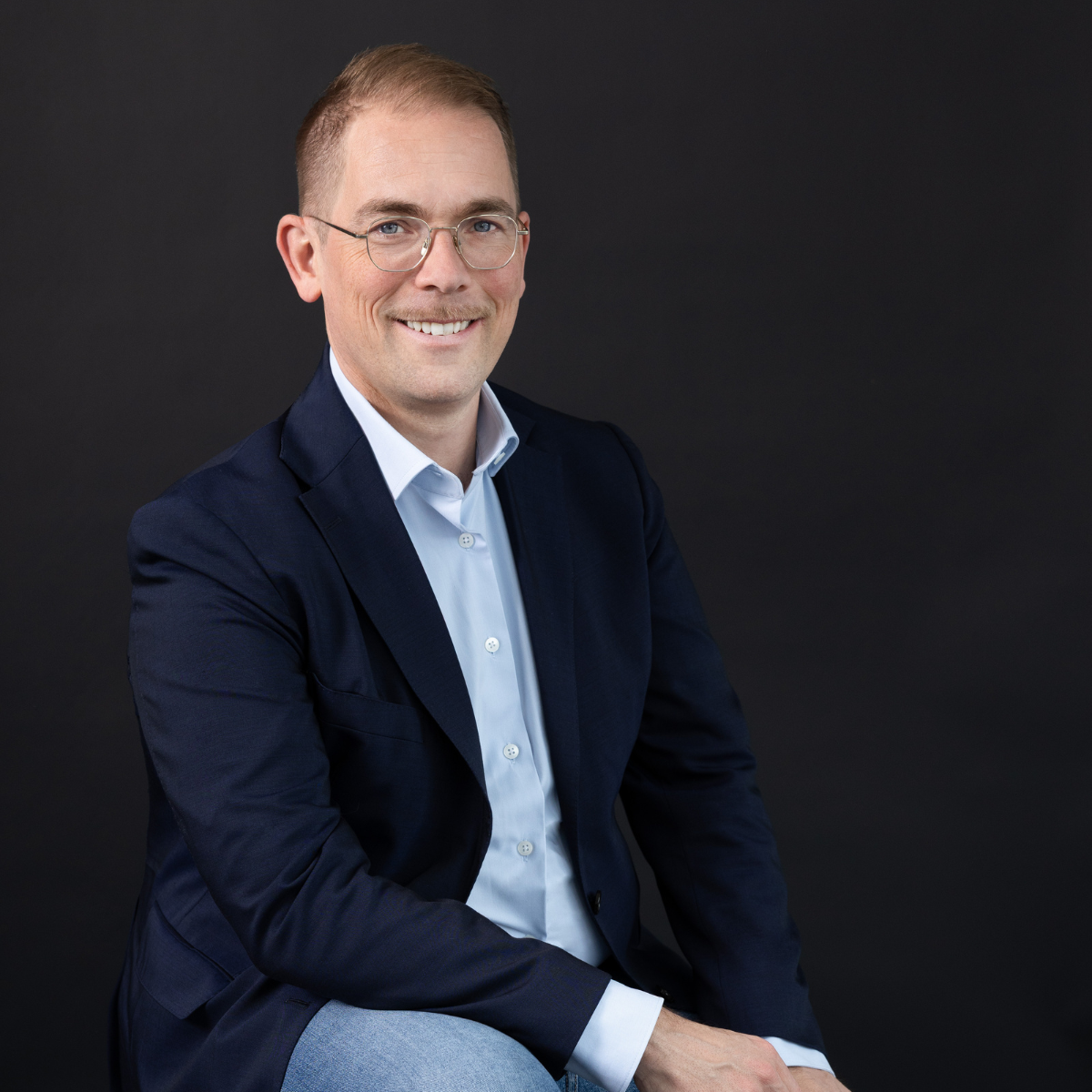
Dr. Michael Kröger, CEO, FLEXOO GmbH
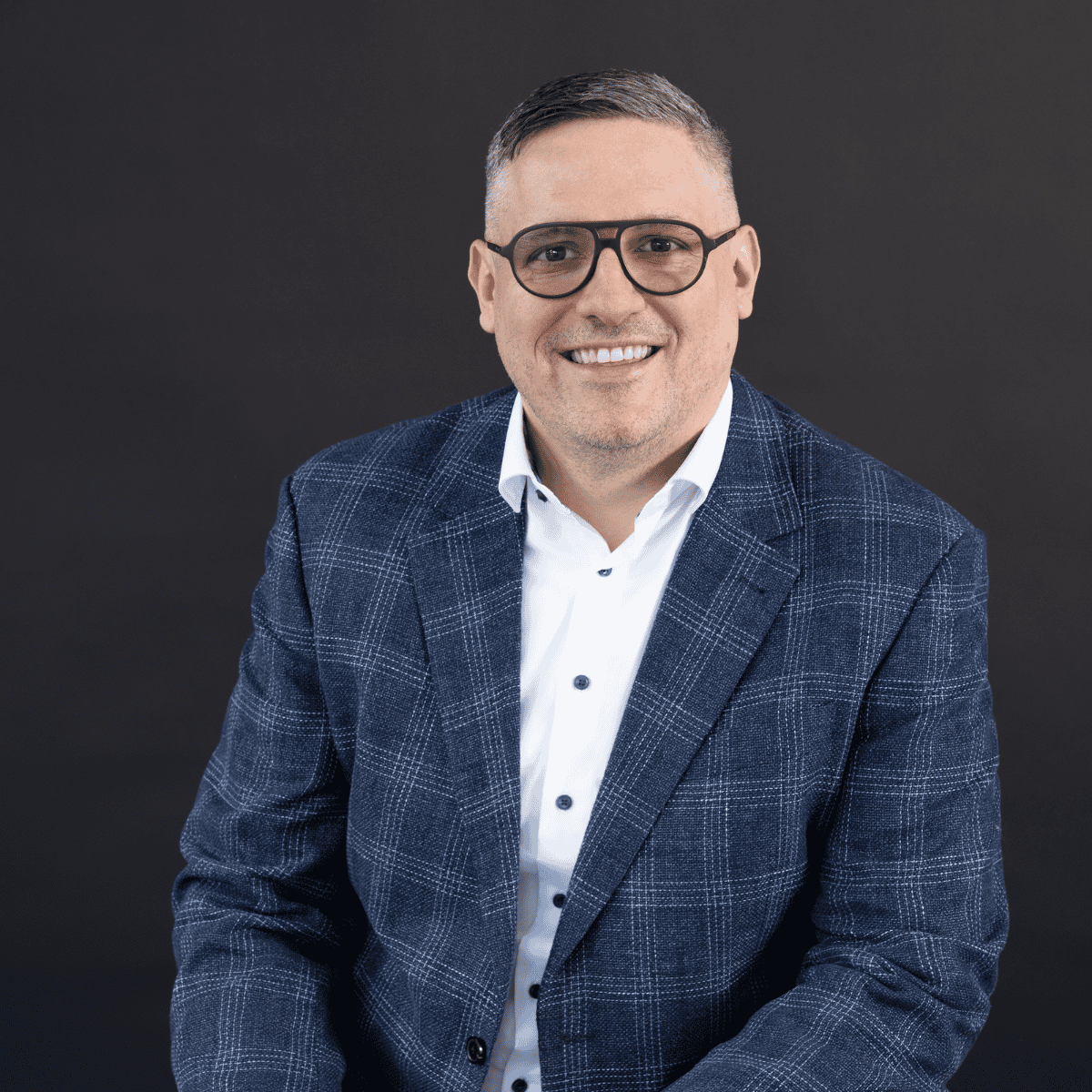
Dr. Janusz Schinke, CEO, FLEXOO GmbH