FLEXOO wins Baden-Württemberg Innovation Award 2026
2026-11-19
FLEXOO wins Baden-Württemberg Innovation Award 2026
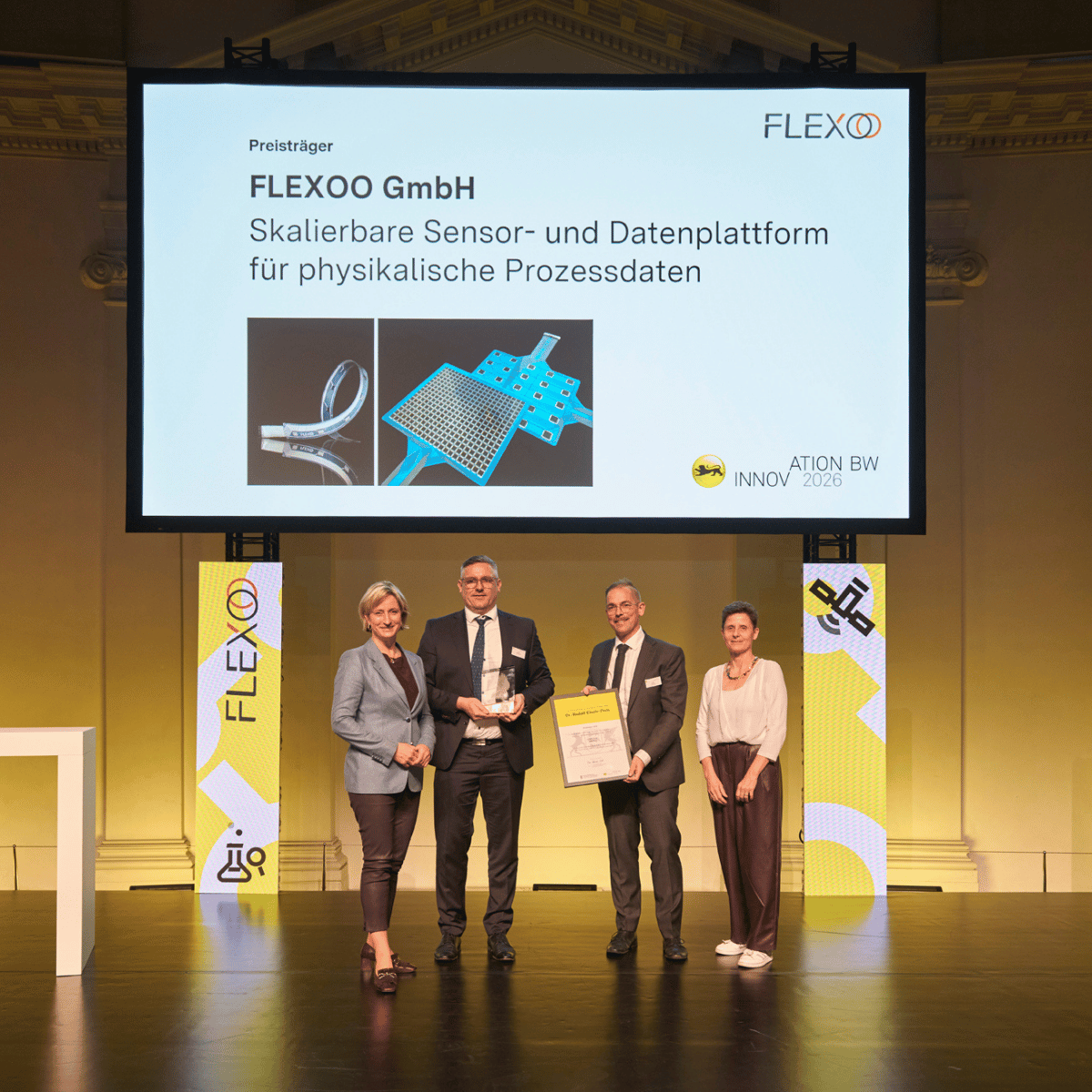
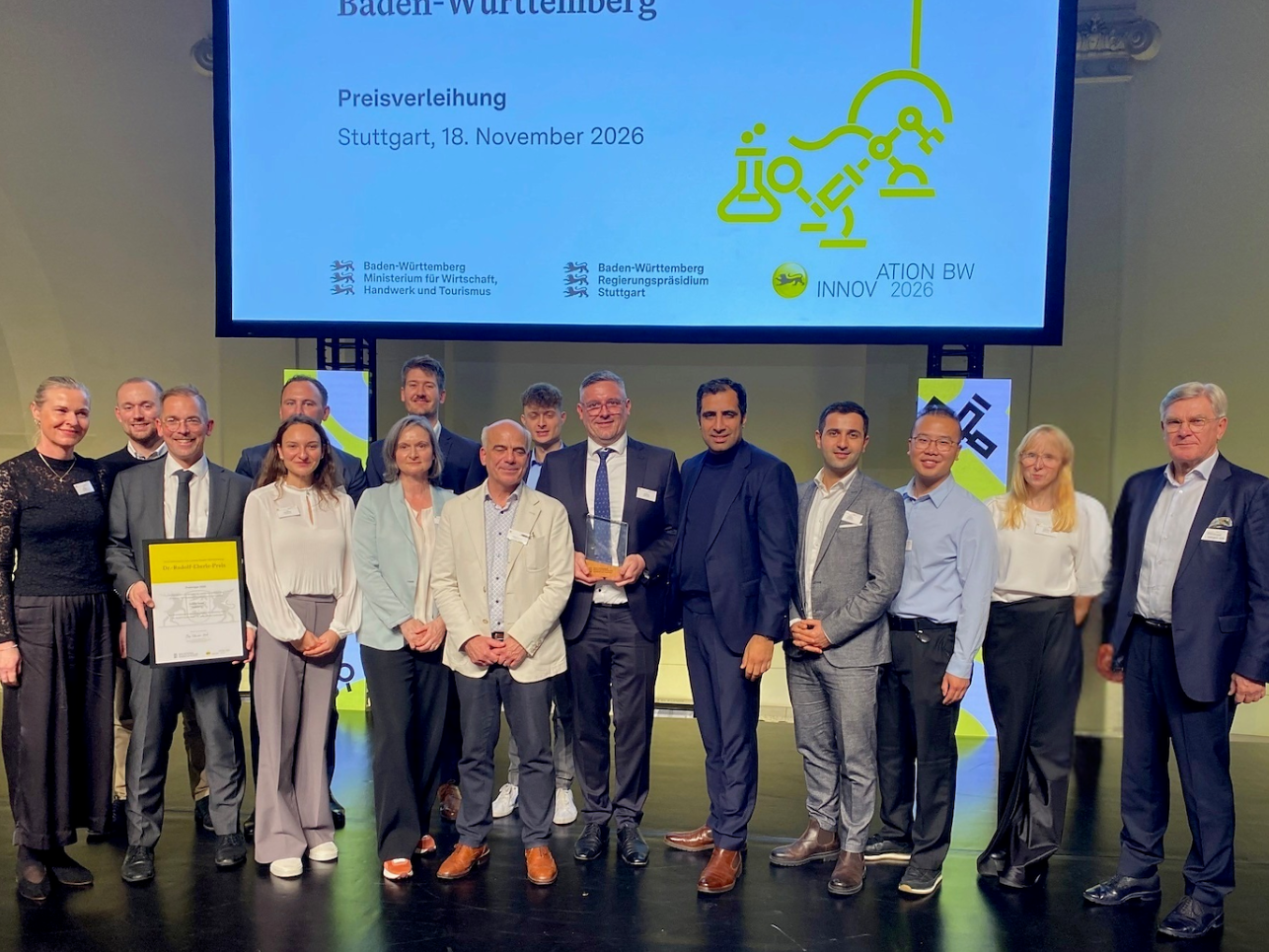
- FLEXOO receives the Baden-Württemberg Innovation Award 2026, one of Germany's longest-standing and most prestigious innovation awards
- The award recognizes FLEXOO's Physical AI sensor and data platform, which provides artificial intelligence with access to physical states such as pressure, force and temperature
- FLEXOO combines printed electronics with artificial intelligence and is building the contact intelligence layer for the next generation of intelligent industrial systems
- The technology is already being applied in robotics, batteries, automotive and industrial systems and is being validated for large-scale industrial deployment
Award confirms FLEXOO’s path towards the contact intelligence layer for industrial Physical AI
FLEXOO has been awarded the Baden-Württemberg Innovation Award 2026. The award recognizes the company’s Physical AI sensor and data platform developed in Heidelberg. The platform provides direct access to physical states such as pressure, force, temperature and mechanical load at the contact and interaction points of real industrial systems.
The Baden-Württemberg Innovation Award, also known as the Dr. Rudolf Eberle Prize, honors outstanding technological innovations and their successful commercial implementation. First awarded in 1985, it is one of Germany’s most established innovation awards and is endowed with a total prize fund of €50,000.
The missing contact intelligence layer
Artificial intelligence can read, see and hear. What it lacks for many industrial applications is the ability to feel. Wherever machines grip, battery cells are stressed or industrial processes operate under mechanical load, pressure, force, temperature and contact conditions often remain invisible.
FLEXOO’s ultrathin, flexibly integrable multisensors capture physical states directly where they occur. The resulting data forms the foundation of the contact intelligence layer that intelligent industrial systems need to not only observe physical interactions, but understand them and adapt their behavior accordingly.
FLEXOO follows a full-stack approach that combines sensing, physical data, models and industrial applications. The goal is to create a scalable technological foundation for Physical AI across batteries, robotics, automotive and industrial systems.
When printing technology meets artificial intelligence
Measurable impact in industrial applications
The performance of the approach has already been demonstrated in realistic robotics applications. In validations conducted together with Siemens and SmartFactory-KL, failed picks were reduced by 64 percent, grasp success rates increased by 28 percent and failure detection became approximately eight times faster. Failure states were classified with an accuracy of 92 percent. Time-to-successful-task-completion was reduced by 1.1 seconds.
The technology also unlocks a new source of information for battery systems. Pressure and temperature distributions at cell level reveal changes that are not directly accessible through electrical measurements alone. This creates an additional foundation for condition assessment, safety and data-driven models.
From Heidelberg to international markets
FLEXOO was founded in 2023 as a spin-off of Heidelberg’s technology transfer platform InnovationLab. Today, the company employs more than 40 people and operates production sites in Heidelberg and Wiesloch. ISO 9001-certified roll-to-roll production, more than 1,000,000 delivered sensors and an extensive patent portfolio provide the foundation for industrial scale-up.
International industrial partners are validating FLEXOO technology for future series applications. At the same time, the company continues to expand its data and modeling capabilities with the goal of establishing the contact intelligence layer for Physical AI on an industrial and commercial scale.
Physical AI begins where intelligent systems gain access to the physical world. FLEXOO provides that access.